Boston Children's Hospital
Where the world comes for answers.
UX Research
Qualitative Research

Project Overview
Role: UX Research Intern
Team: Innovation and Digital Health Accelerator (IDHA)
Tools: Figma, HeyMarvin, UserTesting
Timeline: 3 months (2025)
As a UX Research & Design Intern at Boston Children’s Hospital, I worked under the Innovation and Digital Health Accelerator (IDHA) on one of my main projects, the eConsult platform — a cross-functional team focused on developing and scaling digital health tools to improve pediatric care.
The eConsult platform enables Primary Care providers to securely submit specialist consultation requests. My work centered on improving the usability of the platform’s training materials and supporting user research to help streamline provider workflows.
The Challenge
The eConsult process was critical for fast, remote care, but the training materials were difficult to navigate, visually cluttered, and unclear for both requesting providers and consulting specialists.
Pain Points
Limited insights into how different provider demographics engage with the platform
Cognitive overload due to cluttered visual design (e.g., inconsistent formatting, excessive text, and confusing colors)
Low clarity in workflow explanations, leading to misunderstandings about roles and responsibilities
My Role
As the sole UX intern on this project, I worked cross-functionally with my team to address and solve these pain points.
To gather more insight on how different demographics engaged with the platform, I decided to create 4 versions of the eConsult Moderator Interview Guide,
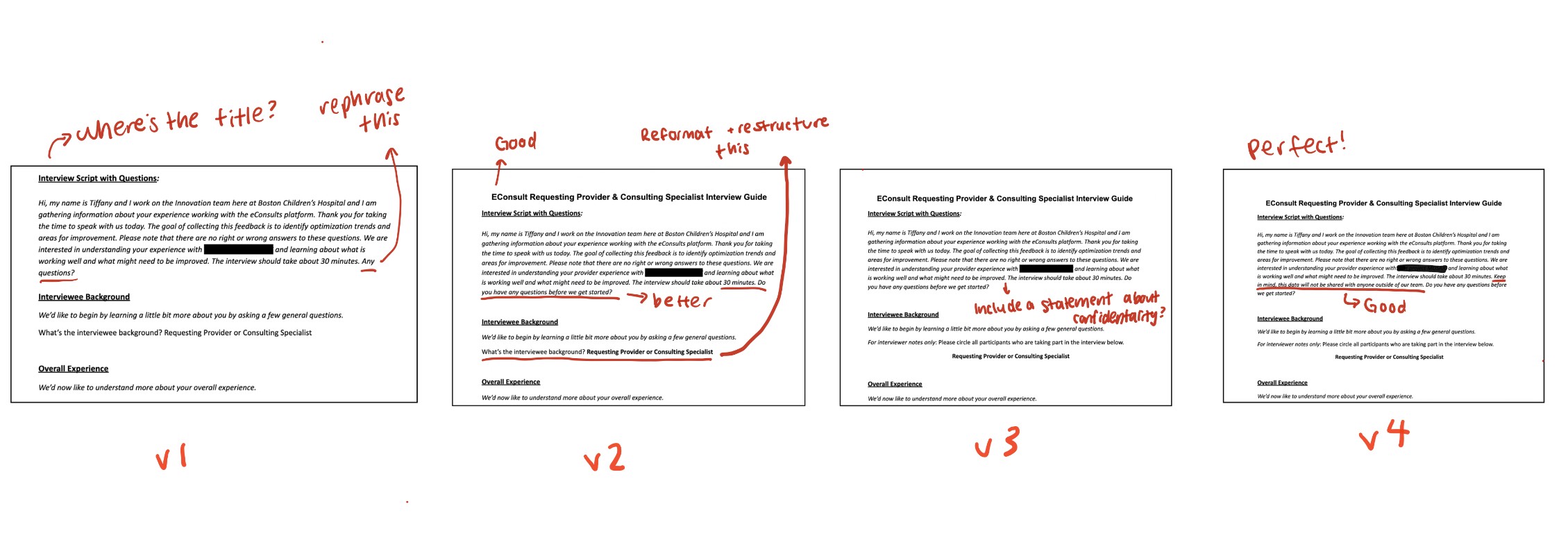
..conduct and annotate user interviews with 4 specialists/providers…

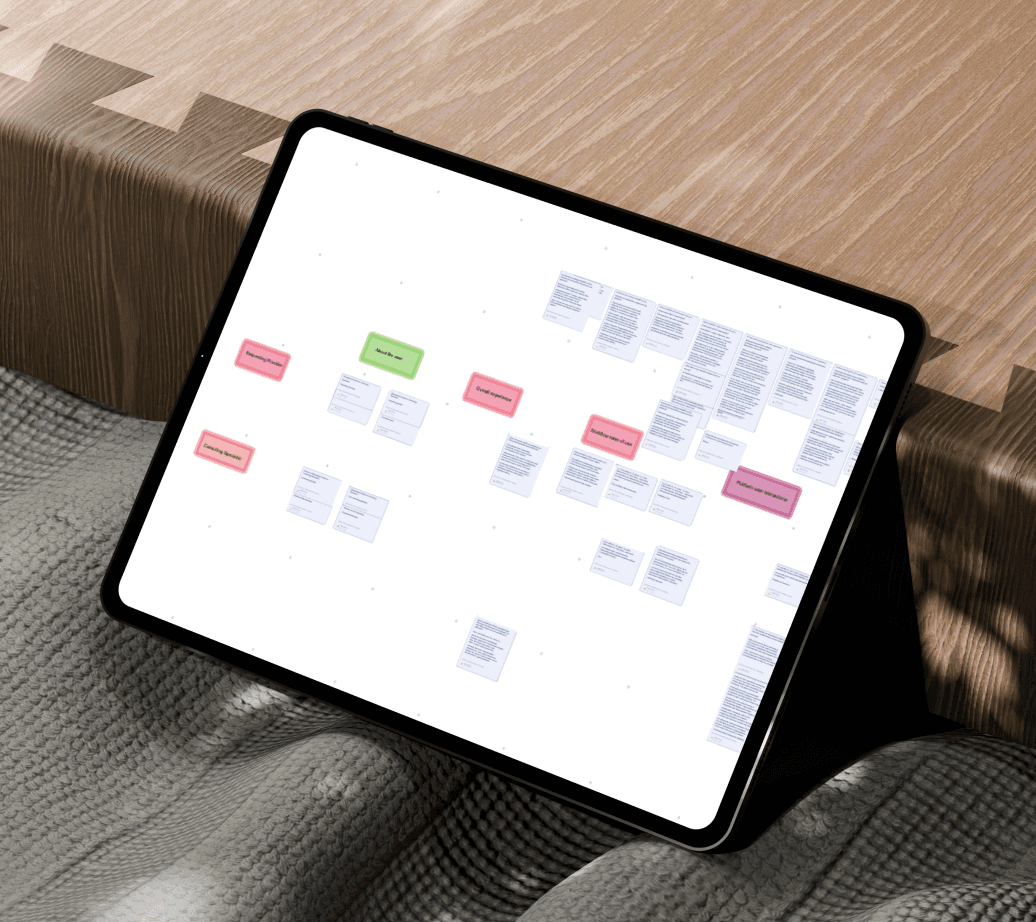
… and synthesize my user findings using an affinity map and documents.
To address the cognitive overload and lack of clarity on the roles, I added design suggestions for my supervisors to look over…
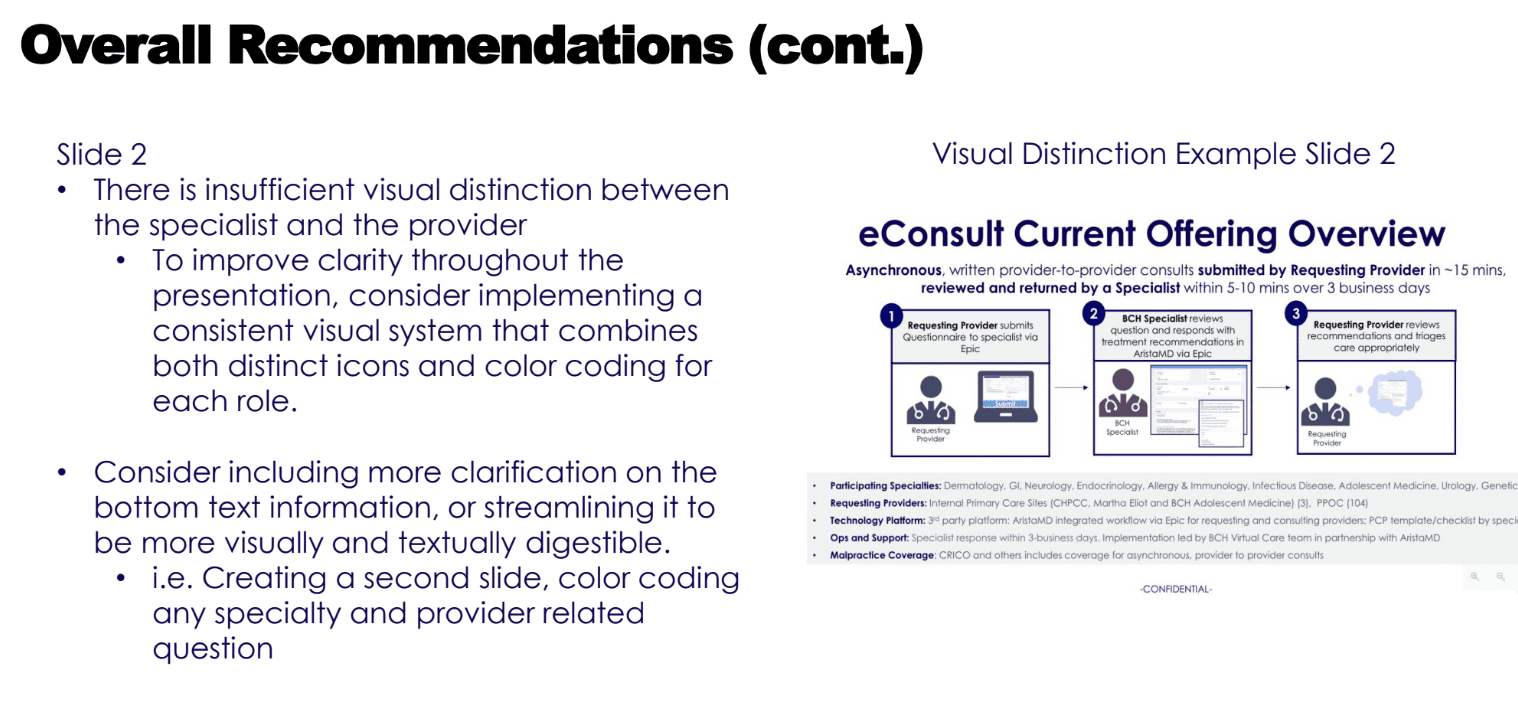
… and then redesigned the training deck slides with my suggestions.

Reflections
This project deepened my understanding of designing for healthcare, where clarity, empathy, and accessibility are non-negotiable. I learned how small visual shifts can make a big difference in complex systems, and how UX research must translate directly into usable improvements. I’m especially grateful to have worked on something with real impact for patients and providers alike!