AdaptX
Making fitness accessible.
UX Design
UI Design
Prototyping

Project Overview
Role: UX Design Intern
Team: 4 UX Design Interns
Tools: Figma, Adobe
Timeline: 4 months (2025)
AdaptX is a location-based app designed to connect athletes with visual or physical impairments to trained “guide” athletes for races and training. It also supports volunteers and event organizers in hosting inclusive athletic events.
Our client, Brendan Aylward, the Executive Director of AdaptX, challenged us to build a tool that could make adaptive fitness more accessible and community-driven.
Problem & Goal
People with impairments often struggle to find compatible guides or accessible events, and organizers lack an easy way to connect with them.
Our goal was to create an app that:
Matches adaptive athletes with nearby guides
Enables seamless volunteer support
Helps organizers manage inclusive events
User Research
There are 4 different user types we were designed the app for:
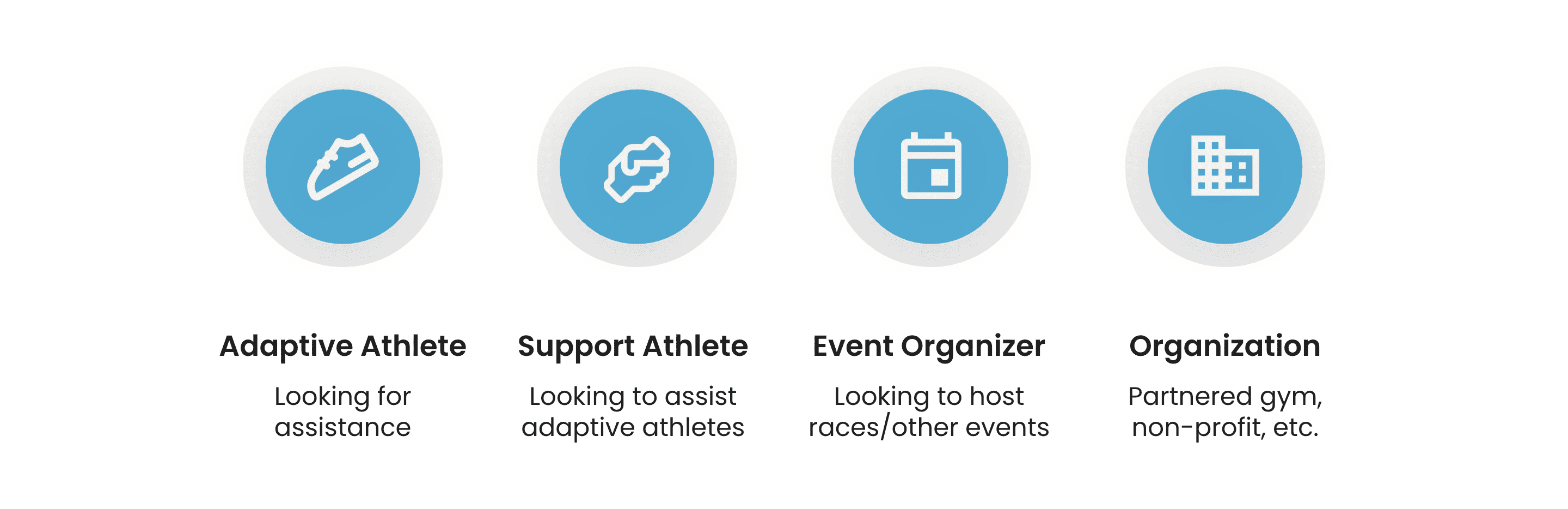
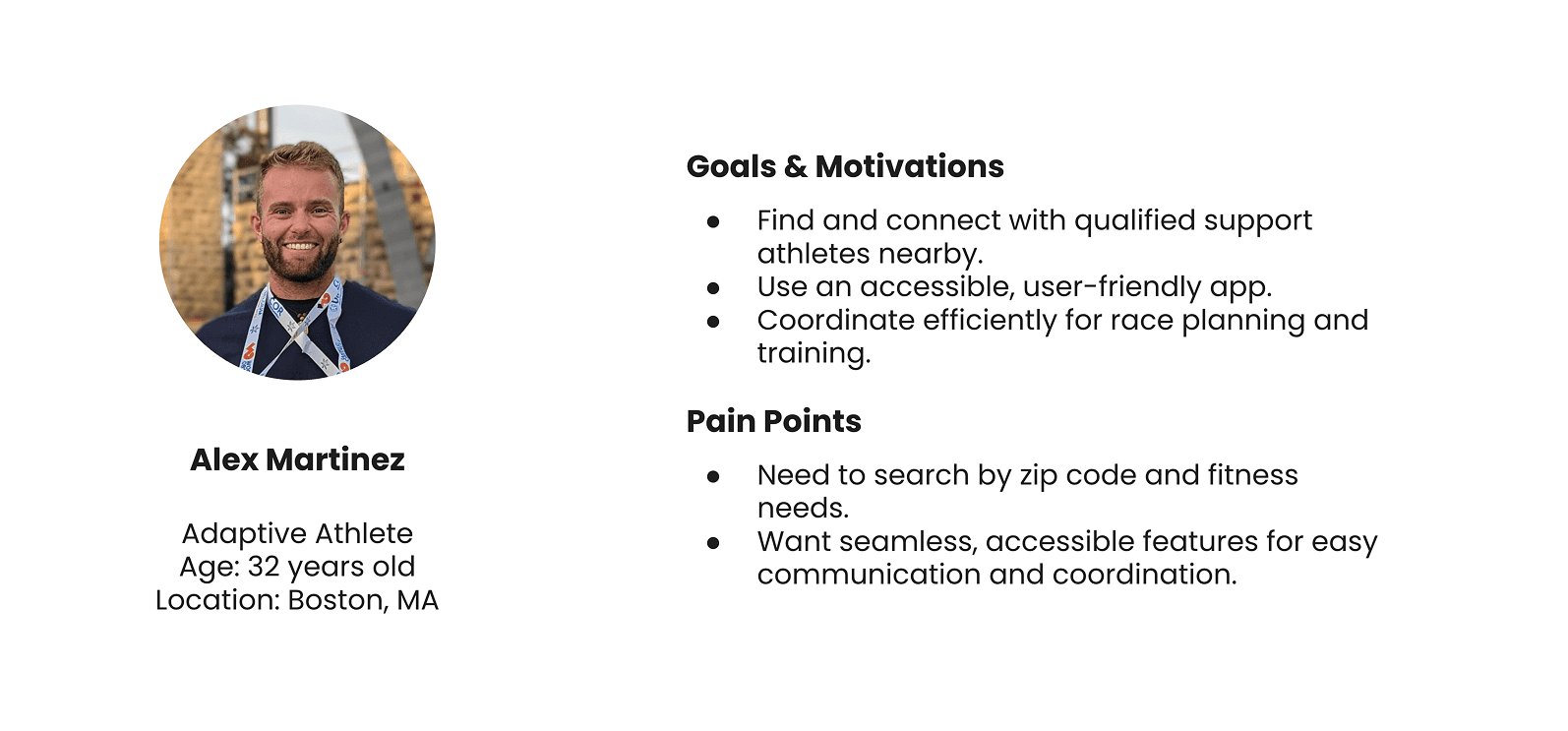
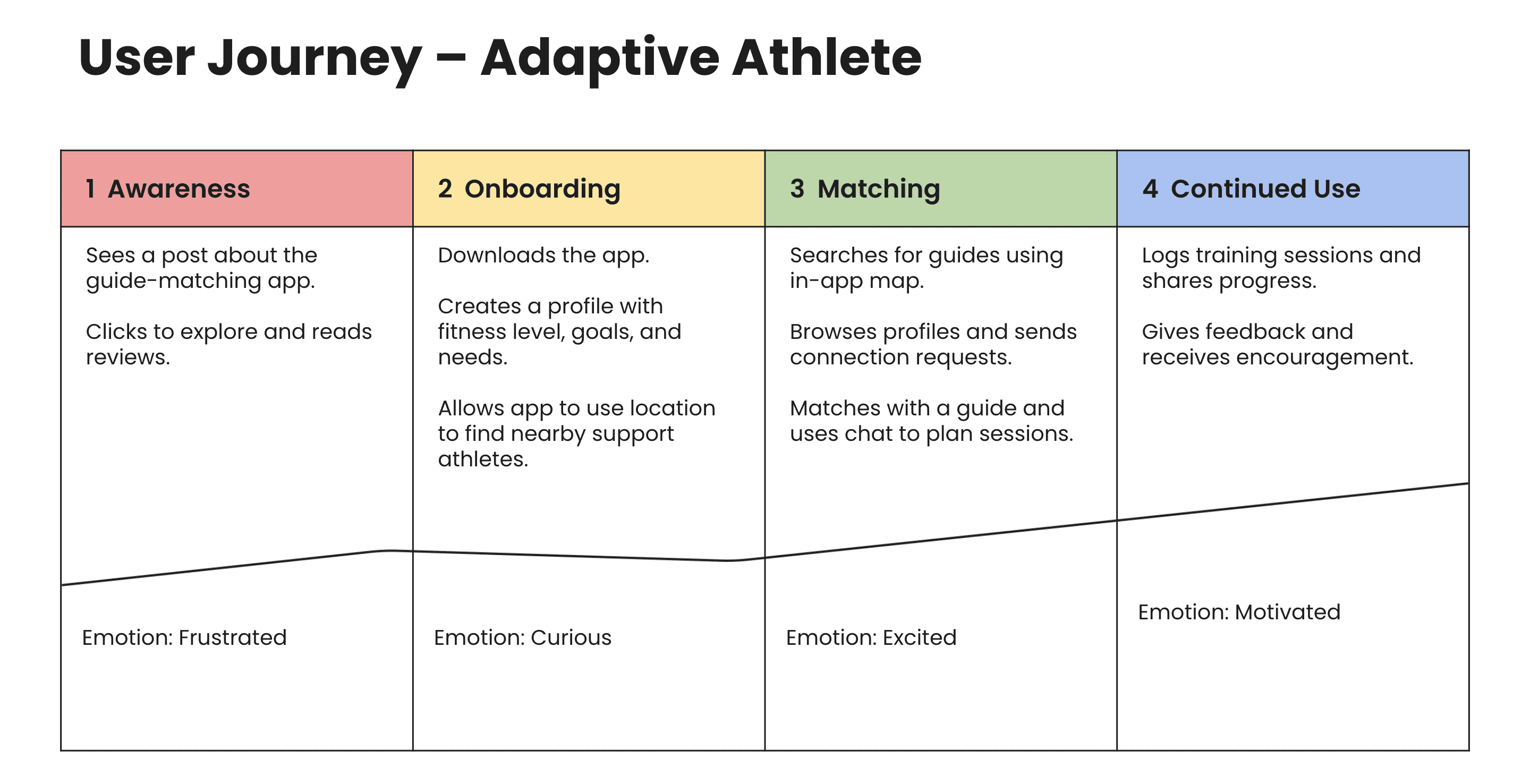
However, we created a core user persona and journey to represent our key primary user, an Adaptive Athlete.
Design Kit
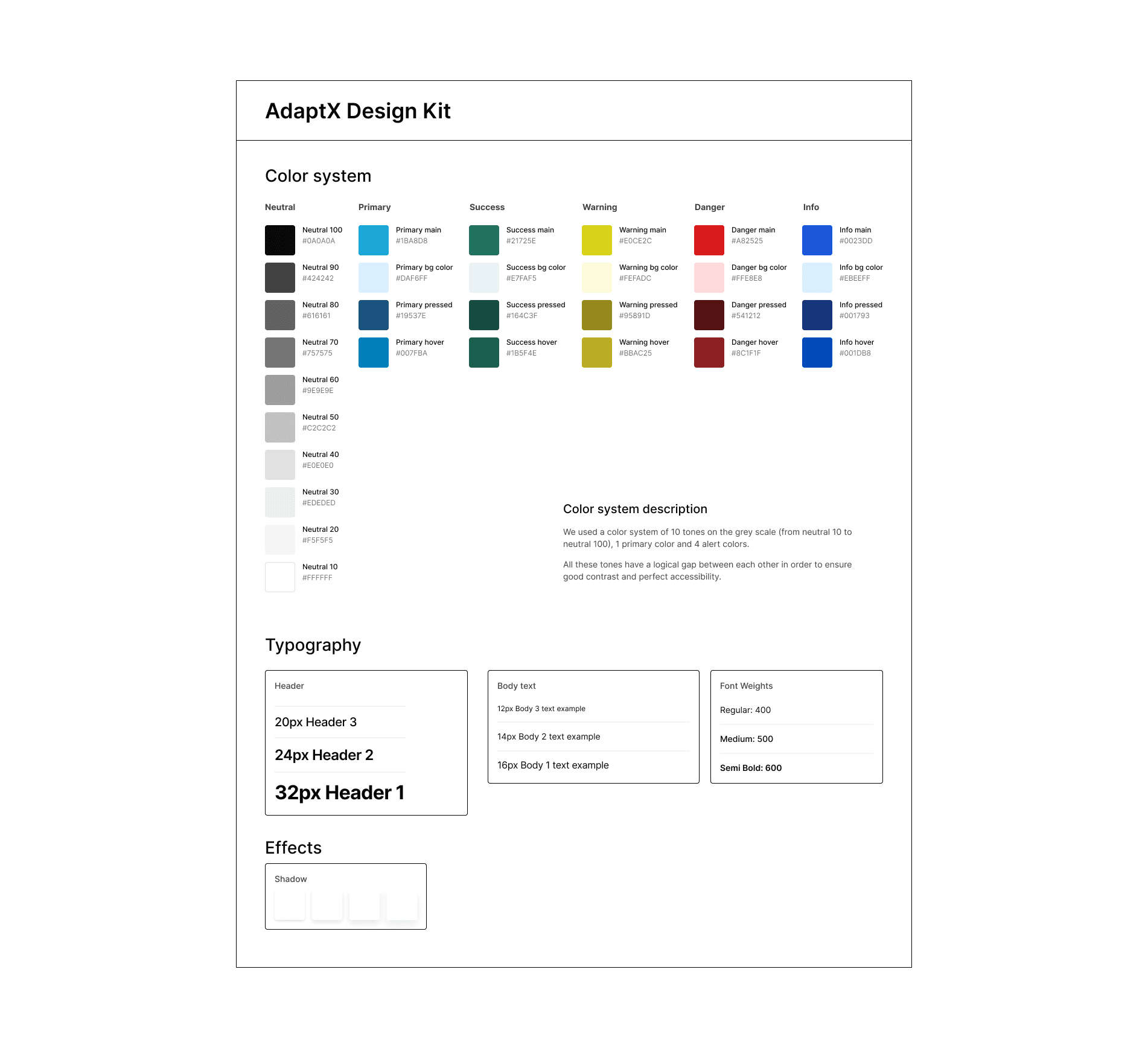
Taking into account the client's requests and needs, we created a design kit for the app.
Initial Design
This is the User Flow Diagram we created to outline how users would navigate our app.
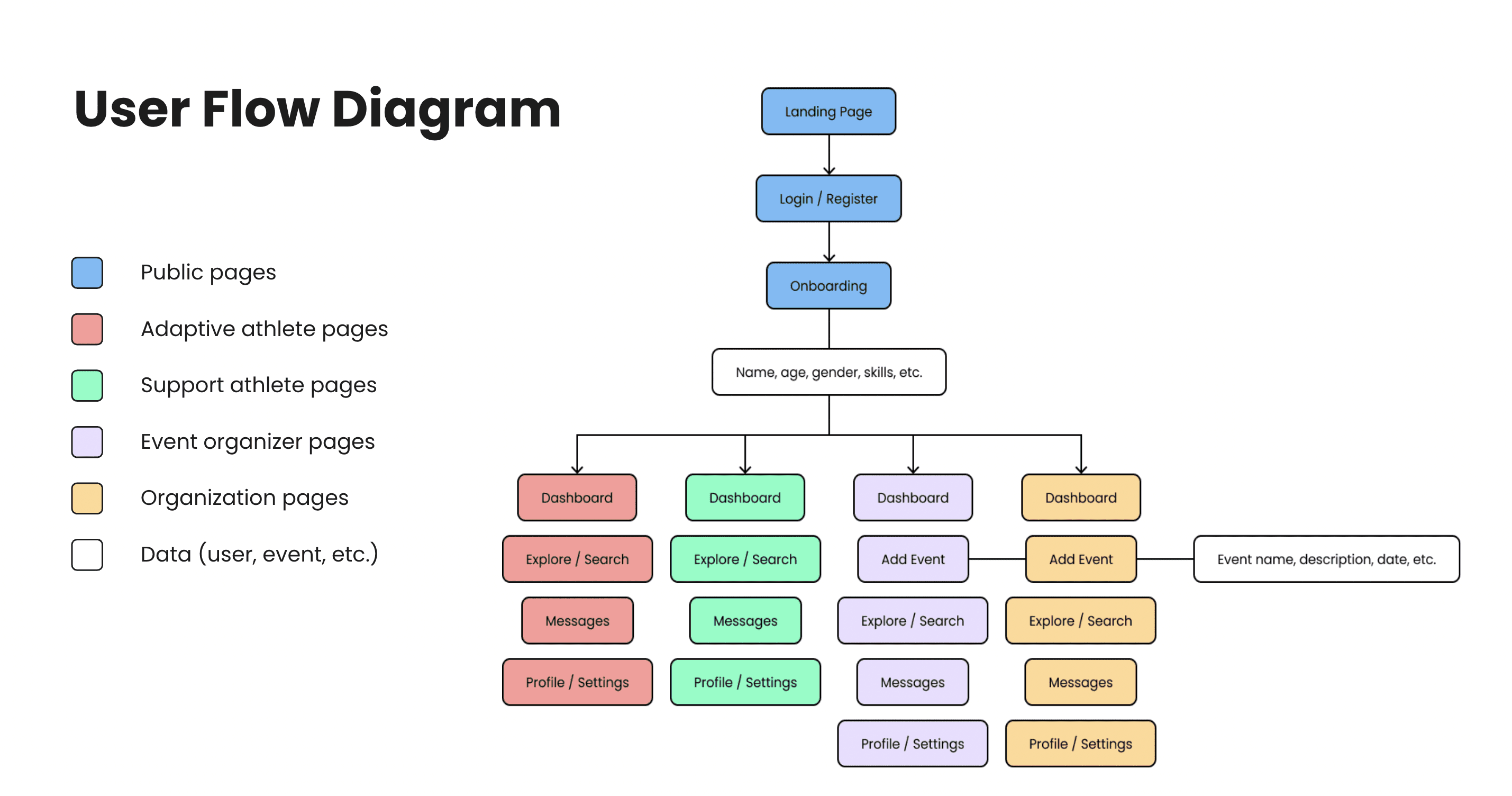
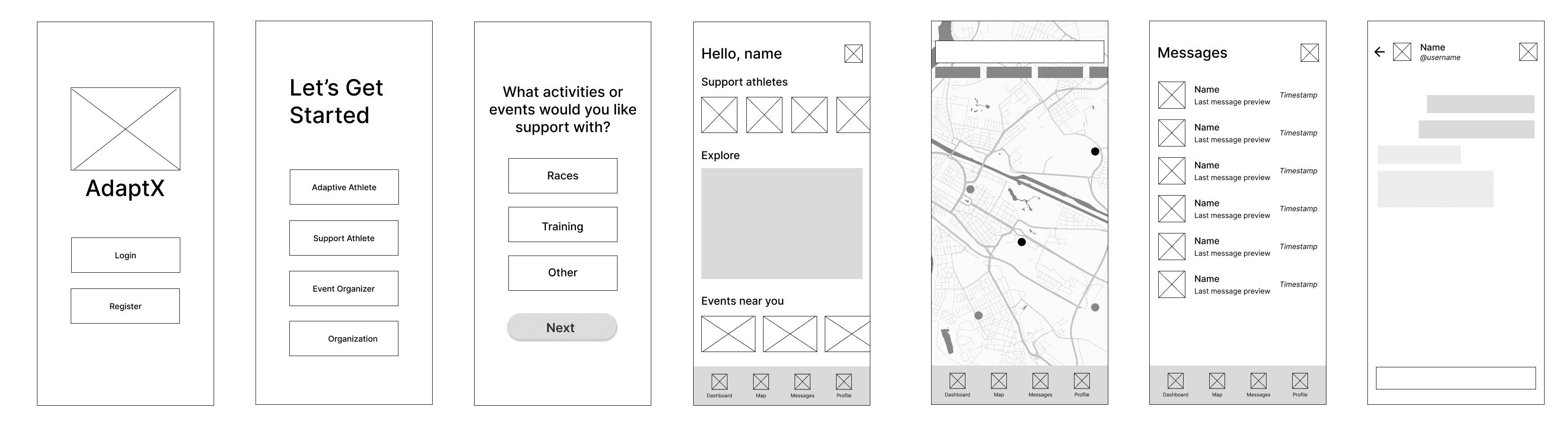
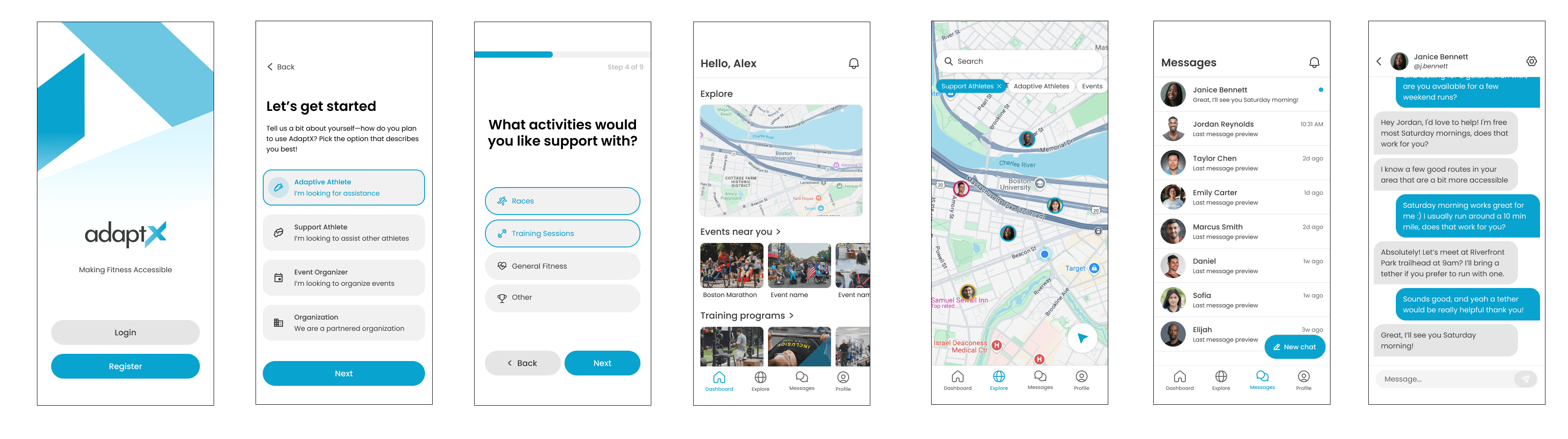
Next, we designed low- and high-fidelity wireframes for core features like Login, Onboarding, and the Map. Users who log in are taken straight to the dashboard, while new users go through onboarding before arriving there. From the dashboard, they can access both the map and chat to match with nearby guides.
User Testing
We interviewed Meaghan Roper, who is a digital accessibility expert and completely blind, over Zoom and walked her through our wireframes/prototype.
From testing with her, we realized to:
Avoid text below 14px
Mark decorative elements to be skipped by screen readers
Ensure icons enhance comprehension, not clutter
Next Steps
Our next steps are to finalizing wireframes and prototypes with to address and fix pain points that Meaghan had brought up — for example, implementing high contrast mode and resolving any remaining UI or interaction inconsistencies. As we prepare for the handoff to the software engineering team, we’ll also document accessibility consideration to support an inclusive and development-ready design!
Reflections
Working on AdaptX taught me how much more there is to design than aesthetic. For the first time, I was designing with accessibility as the core principle, which meant rethinking how we approach color, interaction, and information hierarchy for users with visual and physical impairments. Furthermore, collaborating with my team to build a product from start to finish, ensuring every experience flowed logically into the next, pushed me to think more. This experience helped me grow not just as a designer, but as a communicator and teammate!